SO (my mom pointed out how often I begin statements with this conjunction) I have been reading some propaganda in favor of a raw foods diet. A couple of friends and I recently delved into conversation about nutrition, health and the problems with Western medicine. They recommended that I read Norman Walker's books...he's totally their dude and they've been following his diet and health methods for years. One of them used to have bad acne and after a few months of raw foods and fresh juices she saw improvements. She now has completely clear skin. The other used to suffer from fatigue and headaches a lot and now doesn't deal with these symptoms and says she doesn't get sick.
The thing is, I've started reading some of Norm's stuff and I must say it seems shockingly radical upon first hearing. He basically advocates only eating raw fruits, vegetables, seeds and nuts, which isn't all that different from many other nutrition articles I've read as far as these things being beneficial. His books talk about how processed foods are deplete of any nutritional value (which is also nothing new) as well as how cooking above 120 degrees Fahrenheit kills off the necessary enzymes and organic properties of living foods. I knew before that the more vegetables were cooked the more nutrients they retained, which is another thing that seems sort of intuitive. But, from this angle, cooked foods are not only lacking nutrients but they are detrimental to one's health.
Another huge point of his, though, is drinking lots of fresh vegetable and fruit juices. He talks about the specific benefits of the juice of each plant as well as mixing them for the purpose of helping certain problems or promoting the health of specific areass of the body. Juicing is important, he says, because some of the nutrients in foods are expended in order to digest the food and takes a long time, whereas the nutrients in the juices can be absorbed within minutes. It is important to juice and drink them fresh, though, because they lose much of their value 30 minutes after juicing.
A major thrust of his teachings are promoting colon health. Walker (not to be confused with Texan law enforcement) argues that 80% of disease finds its origin in the colon. According to his argument, when waste isn't moving through the colon normally, it ferments and putrifies, releasing toxins into the body which cause all kinds of ailments. He talks about how many people's normal diet is largely inorganic and leads to the build-up of slime on the walls of the colon which not only stays there but can block absorption of nutrients. The fibers of raw foods act as an intestinal broom, cleaning this out. He also advocates regular colon irrigations, which is essentially washing out the colon with water to remove waste that has accumulated.
Sounds bizarre, huh? I mean, even besides the colon irrgations, it seems hard to think that the way most people have been preparing food for hundreds of years is actually detrimental to human health. Then again, it make sense that although the human body is very adaptable, we reap what we sow in our old age as all the abuse the body has taken over the years starts to show. We naturally link old age and poor health, but I have heard from a couple places that this is not necessarily true and that a lot of cancers, senility, vericose veins, arthritis and other problems associated with old age are because of poor health choices throughout life. A natural death would then be seen as a short, peaceful death without degeneration over tens of years.
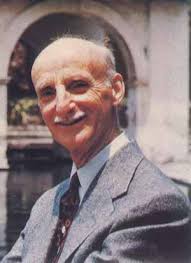
My jury is still out but I am very thoughtfully considering making some diet changes. Norm Walker made it to 99, which is pretty good, seeing as the average for males now is 74.7. I'm interested to hear your reactions.
Tuesday, September 28, 2010
Monday, September 20, 2010
Progress
If you have a moment, please answer the following question:
What is progress?
(this question was provoked by this art exhibit I heard about in February.)
What is progress?
(this question was provoked by this art exhibit I heard about in February.)
Thursday, September 9, 2010
Anti-Semitism and Anti-Zionism
It is perfectly legitimate to criticize Israel’s policies. Israelis do it all the time in blistering debates. But criticism crosses the line into classic anti-Semitism when it exhibits what Natan Sharansky called the “Three Ds.”
Delegitimization: The Jewish State has no right to exist. Israelis do not belong in the Middle East.
Double Standards: Israel is condemned harshly for self-defense measures and social problems that are seen as acceptable or inevitable in other nations.
Demonization: Through distortions and lies, Israel is depicted as the world’s most evil and dangerous country, and the claim is made that if the Jewish State ceased to exist, the Middle East’s—and the world’s—main problems would be solved.
The Link: Anti-Semitism is hatred for Jews, their communities and their way of life. It includes demonizing and dehumanizing Jews as a group. Anti-Zionism is hatred for Israel, the modern center of Jewish life and continuity. This is why many people claim that Anti-Zionism, or hatred for Israel, is a modern variation of classical anti-Semitism. “Anti-Semitic bigotry is no less morally deplorable when camouflaged as anti-Israelism or anti-Zionism,” according to the U.S. Commission on Civil Rights.1 People of goodwill must try to see through anti-Israel propaganda in order to foster reasonable dialogue.
1-“Findings and Recommendations of the United States Commission on Civil Rights Regarding Campus Anti-Semitism,” U.S. Commission on Civil Rights, April 3, 2006.
Tuesday, September 7, 2010
Gravity
The red balloon floats placidly away
Palms empty, open boldly to the sky
The mournful breeze blows soft across this face
Silent eyes pressed closed, not asking why
Palms empty, open boldly to the sky
The mournful breeze blows soft across this face
Silent eyes pressed closed, not asking why
Monday, August 23, 2010
go tell it on the molehill
cocoon
white room
dusty tormentor
flecks on the floor
forgot the window
again
outside? forest fire.
just:
breathe easy
walk straight
save it for later
white room
dusty tormentor
flecks on the floor
forgot the window
again
outside? forest fire.
just:
breathe easy
walk straight
save it for later
Thursday, August 19, 2010
Milk Paint
I recently read an interesting article on design*sponge about using milk paint on furniture, a product of which I had never heard. Shortly after, my mom told me about a new (to us) woodworking store that had all kinds of woodworking supplies. "Do they have milk paint?" I inquired on a whim, not anticipating her affirmative answer!
I therefore decided I should try my hand at it with an old end table I've always liked and had been wanting to modify.
| the specimen |
| before the poly coat |
| the awkwardly angled and lit photo of the finished product |
Friday, August 13, 2010
What did the astronomer say he needed when he was dirty and had bad water pressure in his house?
Meteor Shower! (get it? like, "meaty-er shower"...I'll be here all week)
So a big group of us went out to see the meteor shower Thursday night.It was great because all my boys came and a bunch of my friends. We drove out to Louisberg and when I looked at the sky, I thought I was looking at the milky way from a telescope, it was so clear. I didn't really know what to expect, but given the name I imagined millions of flashes of light raining down throughout the night. It was more like catching a glimpse of a shooting stars quite often, which was almost more gratifying because even though they were the reason we were there and staring at the sky, they seemed somewhat unexpected every time. I couldn't help but squeal like a little pansy in wonder sometimes. They seemed so close to our faces. It was amazing.
Last week, before I knew about the meteor shower, I was struck with inspiration while I was grinding coffee at work, so I scribbled this little diddy onto a paper towel. I guess it was pretty cool timing...
With glory and beauty He crowns the night
like moments passing
word without song
bringin closing timing
finding lost won
One
voice
voice
singing
praising, crying
often wondering
waiting
for shooting stars
lying face up staring into nothing
Thank you, L-rd, that I didn't have to wait too long, that I can stare into something. I love you deeply, like squeezing and scraping on my insides. You move me to tears every time.Thank you for your patience through my resistance and immaturity. I feel love for you even as you wear a veil...please let it not be for too long...
22 candles
| The boys had a good playing tru fris as my mom and I got the table ready, although the weather felt like vietnam.... |
| Then we had my mom's banana cream pie and I got to do candles and everything (in regard to the sweat stains, see aforementioned weather conditions). |
| Ol' Granny McHolzhueter had her unmentionables in a bunch, as usual. |
| Just candid. |
This concludes perhaps the most narcissistic post in the history of blogger. Thanks to everyone for a great bday.
Friday, July 23, 2010
Passing Afternoon
"Passing Afternoon" by Iron and Wine
There are times that walk from you like some passing afternoon
Summer warmed the open window of her honeymoon
And she chose a yard to burn but the ground remembers her
Wooden spoons, her children stir her Bougainvillea blooms
There are things that drift away like our endless, numbered days
Autumn blew the quilt right off the perfect bed she made
And she's chosen to believe in the hymns her mother sings
Sunday pulls its children from their piles of fallen leaves
There are sailing ships that pass all our bodies in the grass
Springtime calls her children 'till she lets them go at last
And she's chosen where to be, though she's lost her wedding ring
Somewhere near her misplaced jar of Bougainvillea seeds
There are things we can't recall, blind as night that finds us all
Winter tucks her children in, her fragile china dolls
But my hands remember hers, rolling 'round the shaded ferns
Naked arms, her secrets still like songs I'd never learned
There are names across the sea, only now I do believe
Sometimes, with the windows closed, she'll sit and think of me
But she'll mend his tattered clothes and they'll kiss as if they know
Her baby sleeps in all our bones, so scared to be alone
*better when you listen while reading
Saturday, June 12, 2010
The Number One Country in Threatening World Peace
"Jews is news. Whatever a Jew or better yet the Jewish State, Israel, does, it always grabs the headlines. The double standard to which the world holds Israel is nothing short of supernatural. The fact that two-thirds of all UN resolutions passed since 1990 have condemned Israel is classic illustration of this point. No one seems to care that Israel, the only democracy in the Middle East, is surrounded by twenty-two non-democratic, totalitarian Arab states with little or no human rights or free speech. Syria occupies Lebanon for decades, but the world ignores it. Pol Pot kills 1.5 million Cambodians in the 1970's yet the UN never passed one resolution condemning him, yet when Israel starts building a fence to keep out suicide bombers the world goes mad. A 2003 European Union survey listed Israel as the number one country in the world threatening world peace beating out such peaceloving nations as North Korea, Iran, Syria and Libya."
-The Washington Post columnist, Charles Krauthammer
Sunday, June 6, 2010
my kaddish is broken
holy, holy, holy, L-rd G-d Almighty,
early in the morning,
too early
doubled over, clenching
her dirge
shall rise to Thee
“my sons..
holy, holy, holy, merciful
“…have mercy on us”
and mighty
how can
G-d in three Persons,
be
blessed Trinity?
holy, holy, holy
the darkness hide Thee
the eye of sinful man thy glory
cannot see
Only Thou art holy; there is none beside Thee,
there is none
there is none
there is nothing
perfect in power
there are no words
in love,
wrenching
and purity
a handful of dirt in a hole in the ground
holy, holy, holy…
L-rd G-d Almighty?
all Thy works shall praise Thy Name, in earth, and sky, and sea
where you left us
holy, holy, holy; merciful
man of sorrows
and mighty
true judge
G-d
as in His high heavens
peace
for us
and all Israel
how can we
say amen?
Monday, May 17, 2010
Mark Twain- "Concerning the Jews"
"If the statistics are right, the Jews constitute but one per cent. of the human race. It suggests a nebulous dim puff of star-dust lost in the blaze of the Milky Way. Properly the Jew ought hardly to be heard of; but he is heard of, has always been heard of. He is as prominent on the planet as any other people, and his commercial importance is extravagantly out of proportion to the smallness of his bulk. His contributions to the world's list of great names in literature, science, art, music, finance, medicine, and abstruse learning are also away out of proportion to the weakness of his numbers.
He has made a marvelous fight in this world, in all the ages; and has done it with his hands tied behind him. He could be vain of himself, and be excused for it. The Egyptian, the Babylonian, and the Persian rose, filled the planet with sound and splendor, then faded to dream-stuff and passed away; the Greek and the Roman followed, and made a vast noise, and they are gone; other peoples have sprung up and held their torch high for a time, but it burned out, and they sit in twilight now, or have vanished.
The Jew saw them all, beat them all, and is now what he always was, exhibiting no decadence, no infirmities of age, no weakening of his parts, no slowing of his energies, no dulling of his alert and aggressive mind. All things are mortal but the Jew; all other forces pass, but he remains. What is the secret of his immortality?"
full text: http://www.fordham.edu/halsall/mod/1898twain-jews.html
the grand canyon and my not-so-grand budget
thanks, cassie, for the recommendation. now, i need a recommendation of how to obtain an extra $87...and a way to not look like a mutant.
speaking of cash/money, I was very recently invited to take a road trip with two of my good high school class friends down to the grand canyon and do some camping/hiking. I've been crunching numbers to see if there's any way I can make it work. If I can pick up some extra shifts, perhaps. Or I may tap into my "emergency fund," seeing how I may or may not ever have a chance like this again. The trip will be relatively cheap, but I'd basically miss a pay period and would have to buy a backpack.
I just need to postpone responsibility for a while.
P.S. Did you know you can feed the fish? :)
Saturday, May 15, 2010
naked feet
So I heard an article on NPR regarding barefoot running staring a scholarly dude who studied a tribal group of people who were characterized as skilled (barefoot) runners. He was a big advocate, passionately asserting that continuous use of running shoes by runners ends up causing chronic stress injuries in the feet and legs. He argues that the human body is designed to absorb the shock and that the stride of running barefoot which causes one to land on the midfoot and ball of the foot is much better than impact on the heel that running shoes cause.
I say all this to say that after reading a bit more and having my interest piqued, and also after a strong desire to get back in shape after a long, sedentary semester doing schoolwork, I am going to slowly try this practice. I gave it a little try today, not far at all- less than a quarter mile probably. It felt weird but didn't cause any pain. I'm going to try to slowly keep adding more time barefoot until my body adapts to this new style of running.
updates to follow. skinny jeans and happy feet, here I come!
Friday, May 7, 2010
The Bhutanese


For those of you who might be interested, I completed my research on the Bhutanese refugee community in KCK. Below you will find my paper (read: intro and last paragraph will give the basic idea) along with some demographic mapping of the neighborhood. Hopefully it's readable. I really wanted to upload some sounds bites from my interviews so people could hear their lovely little accents, but not can do, I guess. Does anyone know how I could do that?
The Dynamics of Displacement: The Bhutanese Refugee Community in Kansas City, Kansas
The position of a refugee is a complicated one with varied perspectives of how they should be treated. Although the position of the refugee is of international concern, one does not have to look far from the local scene to come in contact with these displaced people. The purpose of this research was to examine the situation of the Bhutanese refugees living in Kansas City, Kansas and to understand their role in the dynamics of the ethnically diverse neighborhood in which they live.
I was referred to a friend of a friend who works for an organization called “Mission Adelante.” This organization is based in Kansas City, Kansas and works primarily with the numerous Hispanic immigrants in the area, offering various forms of community support such as language classes and children's programs. Mission Adelante launched a refugee support branch about two years ago lead by David Steler, the person with whom I worked to arrange most of my research. The initial referral to David Stetler was what provoked my interest in researching the Bhutanese refugee community because of the connections that were available. Because of the basis of my decision to research this community, my specific research purpose was open-ended until further information was gathered.
My first meeting with David Stetler proved enlightening and evocative. I was introduced to a community of displaced individuals who found themselves in the middle of a foreign country that and a city that, for the majority of the group, was arbitrarily chosen by someone else,. These Bhutanese refugees originally descended from a group of Bhutanese who immigrated to Nepal about 200 years ago. Conflict came when the Bhutanese living there began to form a political party and interact with the Nepali people in a way that the Bhutanese government did not approve. This eventually led to the group of about 100,000 who were living there to be required to leave. They were not citizens of Bhutan nor would Bhutan recognize them and accept them back. Because of this, they were trapped between two nations with nowhere to go but refugee camps between the two countries. These people lived in these camps for about 20 years until outside governments stepped in and allowed them to be resettled in other locations. The United States agreed to receive 60,000 Bhutanese refugees to be resettled all over the United States. There are about 600-700 Bhutanese living in the Kansas City metro area in two different locations, one of which is the community on which I researched, in Kansas City, Kansas.
In talking to David Stetler, I was given some information in light of the focus of this project, spatial segregation. He described that the Bhutanese had been settled in the area because of the resources that were available to them such as the Don Bosco Center, a social service agency; Catholic Charties, the non-government agency the federal government works with to place refugees on the Kansas side of the Kansas City metro; and David's agency, Mission Adelante, a non-profit religious social service agency. An interesting aspect of information to note about this community is that it is primarily composed of Spanish-speaking people, namely Hispanic immigrants. In addition to this, over time there has been a “crowding out” phenomenon as the Hispanic community has pushed out the surrounding African-American community.
After a preliminary realization of this information, I was interested in finding out the dynamics and tensions, if any, of a very diverse area. The purpose of this research became focused on the experiences of the Bhutanese refugees in Kansas City in light of already existing theoretical framework and other scholarly perspectives on refugees. I was also interested in gathering information about the dynamics between the various demographics that make up this KCK neighborhood.
The majority of the data for this research was conducted through in-depth interview, starting with David Stetler and leading to individual interviews with six Bhutanese refugees. In addition to this, the program SimplyMap was used in order to gather demographic information about the neighborhood.
A useful article for understanding the various perspectives toward refugees in the United States is Jeremy Hein's piece “Refugees, Immigrants, and the State.” As shown in the article, the United Nations defines a “refugee” as a person who “owing to a well founded fear of persecution for reasons of race, religion, nationality, membership of a particular social group or political opinion, is outside the country of his nationality and is unable or, owing to such fear, is unwilling to avail himself with that country.” This definition applies to the KCK community of Bhutanese refugees because they were members of a particular nationality and social group that were forced to be outside the country that had been their home for 200 years.(Hein 44)
Hain discusses two contrasting perspectives toward refugees, one view refugees as exiles displaced from their place or origin, and the other viewing the term “refugee” as a social construct, seeing refugees in essentially the same light as immigrants. He explains that the push-pull theory of international migration comes from a realist perspective in that it makes a distinction between immigrants and refugees. This difference can be found in the difference between planned and chosen migration and a spontaneous and obligatory move. Hain explains that internal migration is common among both refugees and immigrants before international migration. He also states that refugees use kin and friendship networks to aid their entrance into new society in the same manner as immigrants. The realist perspective and the some of the aforementioned aspects he draws attention to seem to be true of the Bhutanese refugees. The Bhutanese experienced internal migration as they had to migrate to refugee camps long before the resettlement process began. In regard to the statement about kinship ties, my research indicated that they were not the same as immigrants, especially when in comes to the immigrant pattern of “chain migration,” or cumulative causation. “Chain migration” is the pattern where immigrants attract family and friends from their country or origin, thus creating chains of people who continue to immigrate and the network keeps expanding. (Massey 42) Refugees have limited choice about their destination. Although the government of a refugee-receiving country might choose to send refugees to a community where there are resources, including social capital, for this group, the United States' government often chooses to distribute refugees spatially throughout the U.S. Refugees are unable to receive government financial assistance if they choose a different geographic location. (Hein 49)
In Peter Marcuse’s piece, The Enclave, the Citadel, and the Ghetto: What Has Changed in the Post-Fordist U.S. City,” he discusses various types of spatial segregation. My research indicated that two of these three types are visible in this particular neighborhood. The immediate are where the Bhutanese could be considered an enclave, although not a Bhutanese enclave but a Hispanic immigrant enclave. This type of segregation he describes as being an area where people sharing ethnic or religious background congregated in order to improve their economic, social, political or cultural development. The second type that can be observed is the ghetto, which he describes as a spatially segregated area which can be seen as subject and inferior to those outside the area. In this case, the aforementioned enclave is surrounded by what could be considered a black ghetto, especially directly to the north of the Hispanic enclave.
The specific boundaries of the area I studied in Kansas City, Kansas are as follows: a central point was 18th street and Central with the boundaries from 29th to 7th street east to west and Minnesota to 70 Highway north to south. I was able to do demographic mapping with SimplyMap, which was helpful in understanding the ethnic make-up of the neighborhood. In the appendix section are maps that show the Hispanic, Black, and White make-up of the area I studied. It was evident from the maps that the “crowding out” phenomonon was actual in reality, as it was easy to see that where the Hispanic population was most dense, the black population was most sparse and vice-versa. For instance, at a central point in the neighborhood at 18th and Central, the maps showed the area to be 8-15% black and 45-60% Hispanic.
When I addressed ethnic tension in my refugee interviews, my main finding was that the interviewees had neutral attitudes toward the Hispanic community. Most said that they had little interaction with their Spanish-speaking neighbors because of the language barrier. A few mentioned that they could be confused to be Mexican because of their physical similarities and that their neighbors were often surprised to find out that they did not, in fact, speak Spanish. I was interested in finding out what language was most important for them to know, English or Spanish, since Spanish was so widely spoken in the community. Unanimously, the response was English, as all the social service agencies that work with the refugees are English-speaking agencies. Some interviewees as well as David Stetler mentioned that they would have more job opportunities within the community if they could speak Spanish, though, instead of having to venture out geographically. One interviewee mentioned that some of the others had trouble because of tension between the Hispanic community and black community, saying that there were times where they would be cut off in traffic or be in danger of being robbed at night because they were confused by black people to be Mexicans. The reason for the perceived animosity between the Hispanics and blacks is unknown to me at this point; it was not something for which I probed in my interview questions.
There were many questions asked of the Bhutanese that applied to the areas of occupation, living conditions, age, size of family, and more. The answers were in-depth and comprehensive, allowing for a highly valid understanding of the refugee experience. Most of the questions elicited the same responses which enhances the credibility of the results. Most respondents did not choose to move to Kansas City. All said they liked living in the neighborhood, that it was good and safe and that they appreciated all the assistance they received. Most had not been in the United States long, several less than a year. They all resided with their expended families which were fairly large in number- more than five per household. All but one had to travel outside the city for work and described difficulties with acquiring transportation. One of my favorite question responses was for the question, “How long do you intend to remain living here?” The unanimous initial response was to laugh, and say something to the effect of “indefinitely.” Most accepted that they had been resettled in Kansas City and seemed pleased to be out of the camps.
I took many pictures of the neighborhood, most of which alluded to a strong Hispanic presence. There were many churches, stores, parking signs, etc. that were either written in English and Spanish or in Spanish only. From the pictures of the local high school and middle school, it appeared that both the Bhutanese and the Hispanic people had access to good education, as much as I could infer from the well-kept look of these buildings. There was not any visual evidence of Bhutanese refugees in the neighborhood, except for the possibility that a mural which seemed to depict the history of the community alluded to blacks, Hispanics, and possibly Bhutanese were living together at present day.
I conclusion I drew from my research was that the Bhutanese experience seemed to line up with the realist perspective toward refugees, that they do have truly unique experiences from those of immigrants. The group living in KCK was too new to make any conclusions about their pattern of spatial assimilation; many had been there less than a year and had been sent to the area by the United States government. All in all, this endeavor was a rewarding experience as it allowed for me to better connect with and understand a group of people with a rich culture and an epic history that lead to them taking residence in the metropolitan area in which I live. It is worth taking note, although not necessarily applicable to this research, that my interactions with the Bhutanese gave me a generous dose of perspective. By this I mean that many seemed very grateful to be living in an area that some Johnson County residents look down upon. One respondent was grateful that he made a friend at his job at Wal Mart because now he doesn’t have to walk several miles to and from his job, which was especially difficult in the winter snow. There were many things they were content with that my peers and I would probably complain about. I have a lot of respect for these people and hope to be able to work with them more in the future.
Subscribe to:
Posts (Atom)